We spent about a month in Otaru in October, and we didn't want to leave. We've just landed back in the US and are already looking forward to March, when we return with the keys to our house. This is our lookback: what the month was like, where we stayed and what it cost, how the fall colors went, our trips to Sapporo, a drive to Niseko and Lake Toya, and a snowy drive out of town.
The house, the snow plan and our first weeks in town are in our Otaru update, so we won't repeat all of that here.
On this page 12 sections
- October in Otaru: weather and fall colors
- Where we stayed: a month in an Otaru Airbnb
- Groceries and laundry
- Around Otaru: a port food festival, a botanical garden and Otaru Park
- Sapporo: Nakajima Park, a sweet potato festival and a hidden-gem sandwich
- A day trip by car: Kutchan, Niseko and Lake Toya
- Leaving Otaru: why we drove to Shin-Hakodate-Hokuto
- What it cost
- Otaru or Sapporo for a month?
- What we'd tell you before you go, and what's next
- Common questions
- Sources
October in Otaru: weather and fall colors
The weather was a mixed bag of sun, clouds and rain, and we had plenty of good days. The wind can be quite powerful at this time of year, so bring a layer that cuts it.
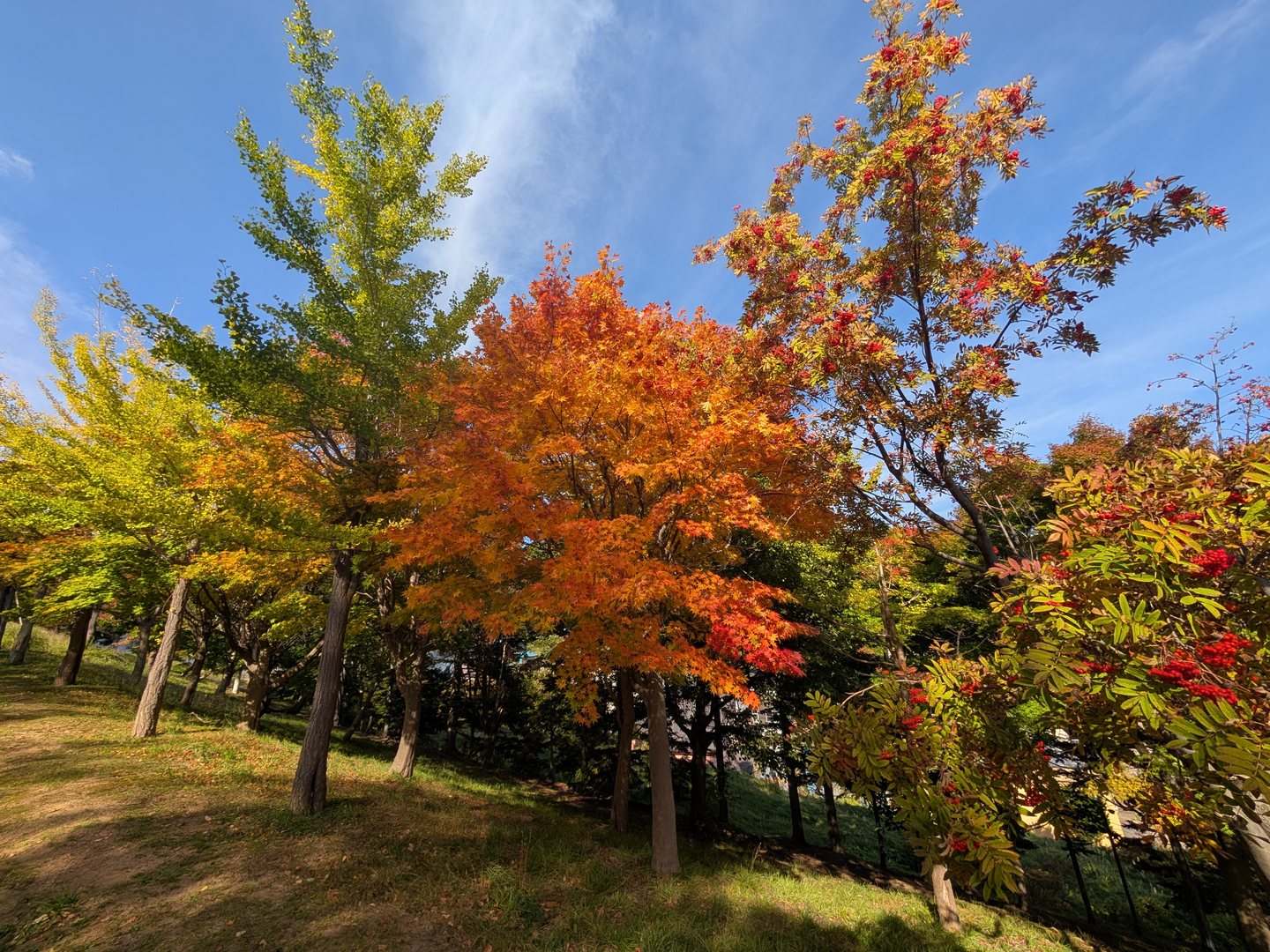
In our last update we worried we'd miss the peak of the fall colors. We caught much of it, because the color got better all through the month. Around Otaru and along the coast it was getting close to peak, or just past it, by late October. Inland, near Kutchan and Niseko at higher altitude, the peak had probably come in mid-October. If we were planning around the leaves again, we'd aim for mid-October inland and the last part of October on the coast. That's one year's experience, and the timing shifts from year to year.
Where we stayed: a month in an Otaru Airbnb
We stayed in this Airbnb apartment and paid $2,176 for the month. (It isn't an affiliate link, and Airbnb isn't paying us for the mention.) It's also on our Stays page.
It was a great apartment for a couple, and it may be a bit tight with more people. In our unit both beds were pushed together in a bedroom that is separated from the living area by a sliding door. The water pressure was fantastic, and there's a washer/dryer combo, which is worth looking for in any long-stay rental.
The location is the real draw, because it's very walkable:
- It's about a 10 to 15 minute walk to JR Otaru Station.
- A Lawson convenience store is very close.
- Restaurants surround the property.
- The shopping street is only a block or so away.
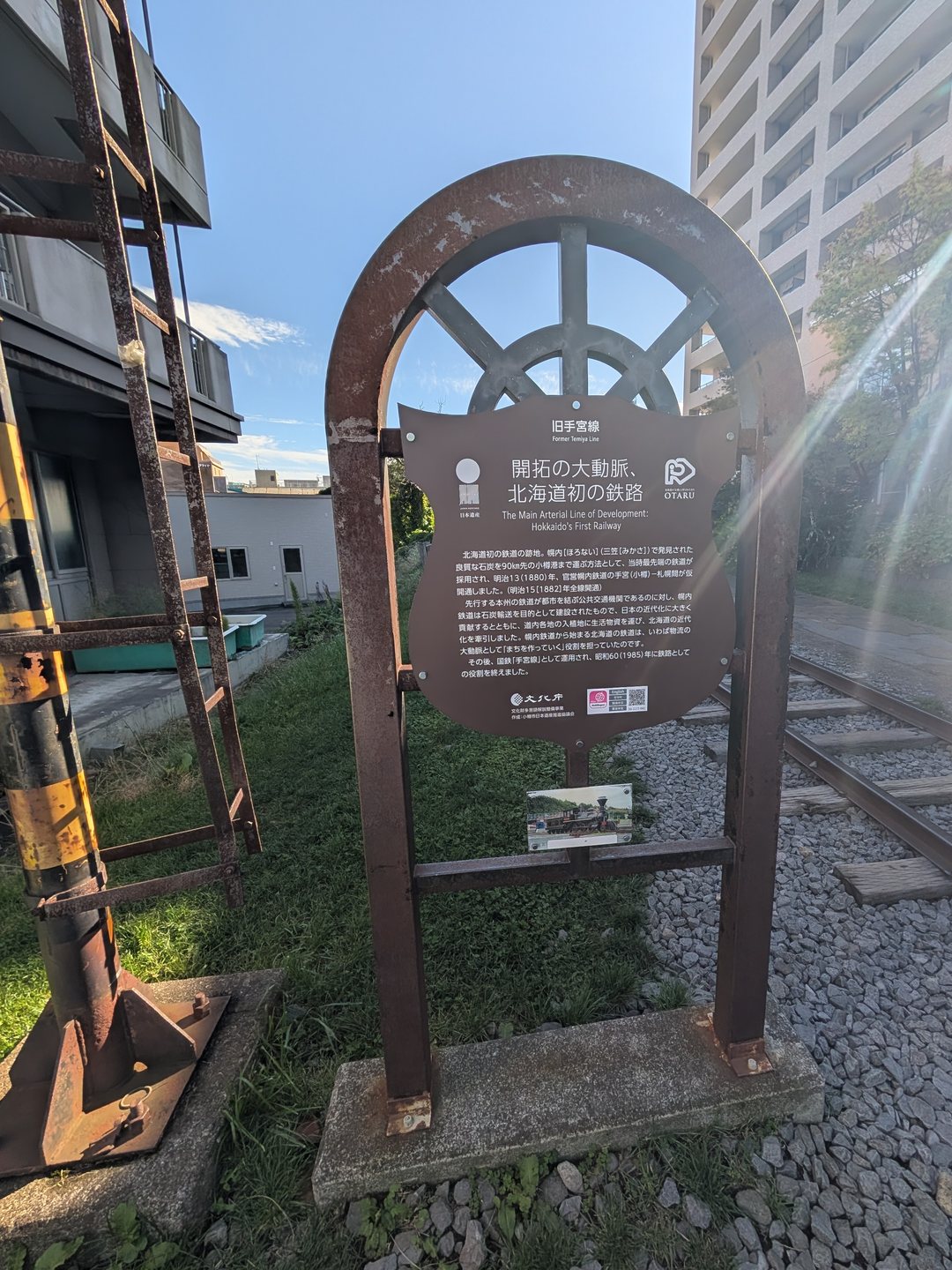
- The start of the old railway walking trail is a block away, and it's a nice way to walk across Otaru.
That trail follows the former Temiya Line, Hokkaido's first railway. It closed in 1985 and was turned into a walking path of roughly a mile (1.6 km), with some of the old track still in place (Japan's tourism ministry).
Groceries and laundry
We used two supermarkets, and which one suits you depends on where you're staying:
| Store | Where | Best for |
|---|---|---|
| Nagasakiya Otaru | The basement of the large building across from Otaru Station. A Don Quijote and several small restaurants and food vendors are in the same building. | A convenient everyday store if you're staying within walking distance. |
| Aeon grocery at Wing Bay Otaru | The Wing Bay mall. Parking is on the ground level across from the entrance doors. | A bigger store, and we found the selection a bit better. Good bus and train access from many parts of Otaru, and easy if you're renting a car. |
For what supermarket delis and eating out cost, see Eating Out Is Cheap, Too in our Otaru update.
Around Otaru: a port food festival, a botanical garden and Otaru Park
In early October we caught the YOI-TARU Food & Drink Festival at Otaru Port Square, by the port where the cruise ships come in. It's a free-to-enter, three-day holiday-weekend event put on by Otaru and Yoichi tourism groups, with food from shops in both towns (organizers' announcement, in Japanese). There were food vendors, live entertainment, and containers set up as little restaurants, and it's a nice spot on the water when the weather is good. We had beautiful fall weather. We ate chicken skewers, potato spirals and pieces of fried chicken.
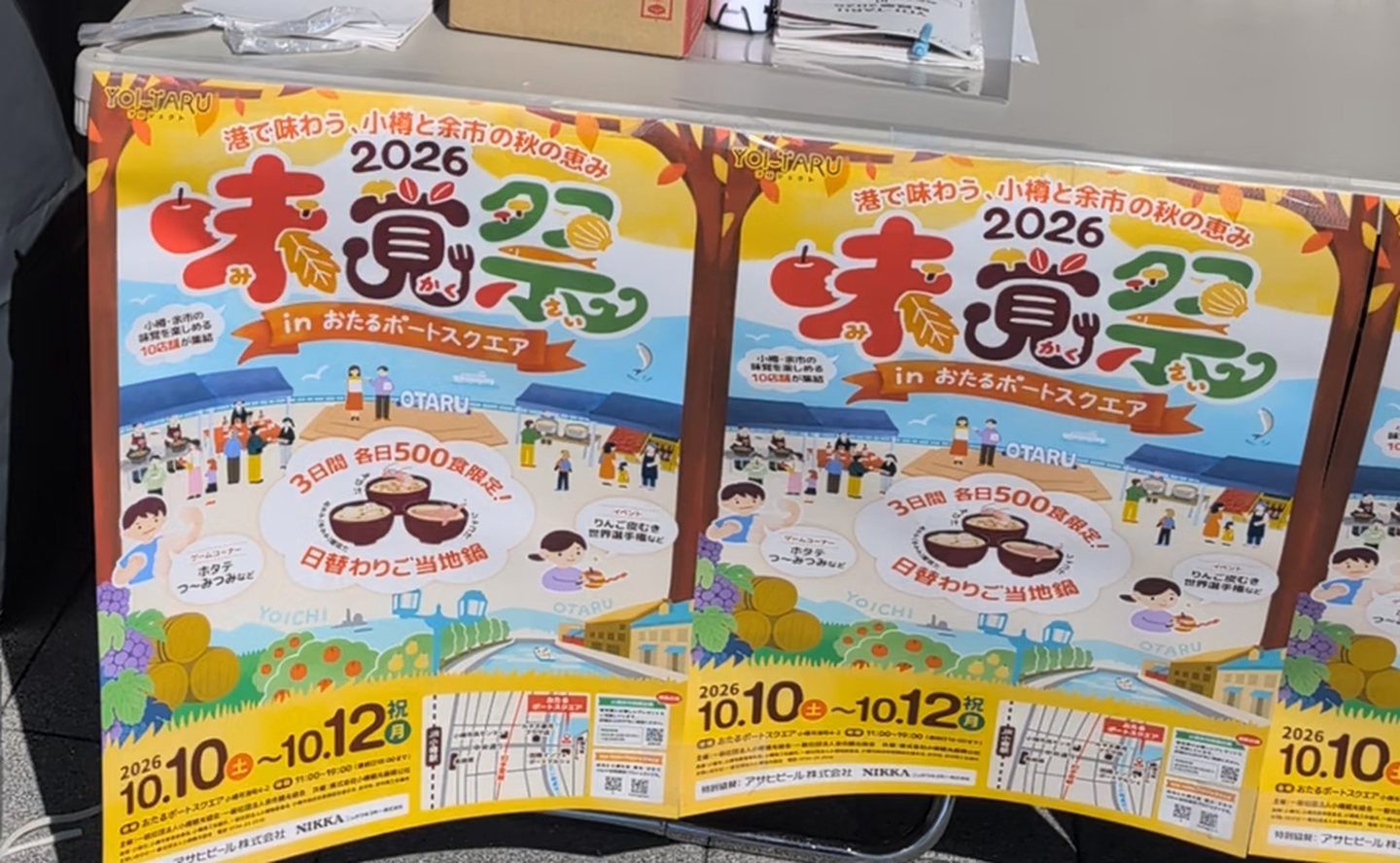
Events like this are easy to miss if you don't read Japanese. NihonLocal.com, another site from the company that owns this one, is a great resource for local events around Otaru, and it also publishes free guides, including one on the fall colors.
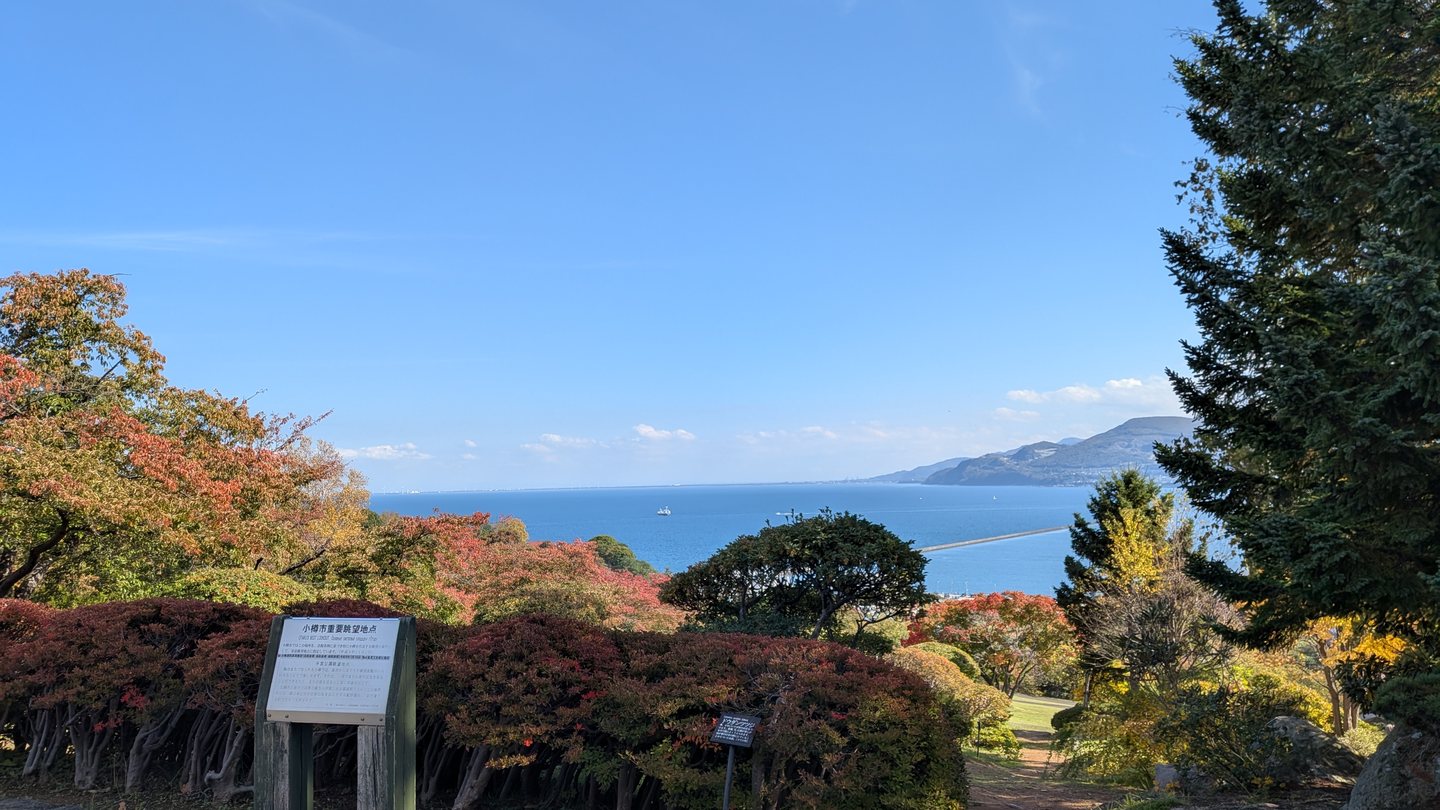
The Temiya Ryokuka Botanical Gardens, where our hero photo and these two were taken, sit on a hill in the north of Otaru, inside Temiya Park. The views out over Otaru Bay and the mountains beyond are great, and the fall color was already showing when we visited in early October. Entry is free, and the city lists it as open from late April to October 31, so it's closed for the winter now (Otaru city listing, in Japanese).
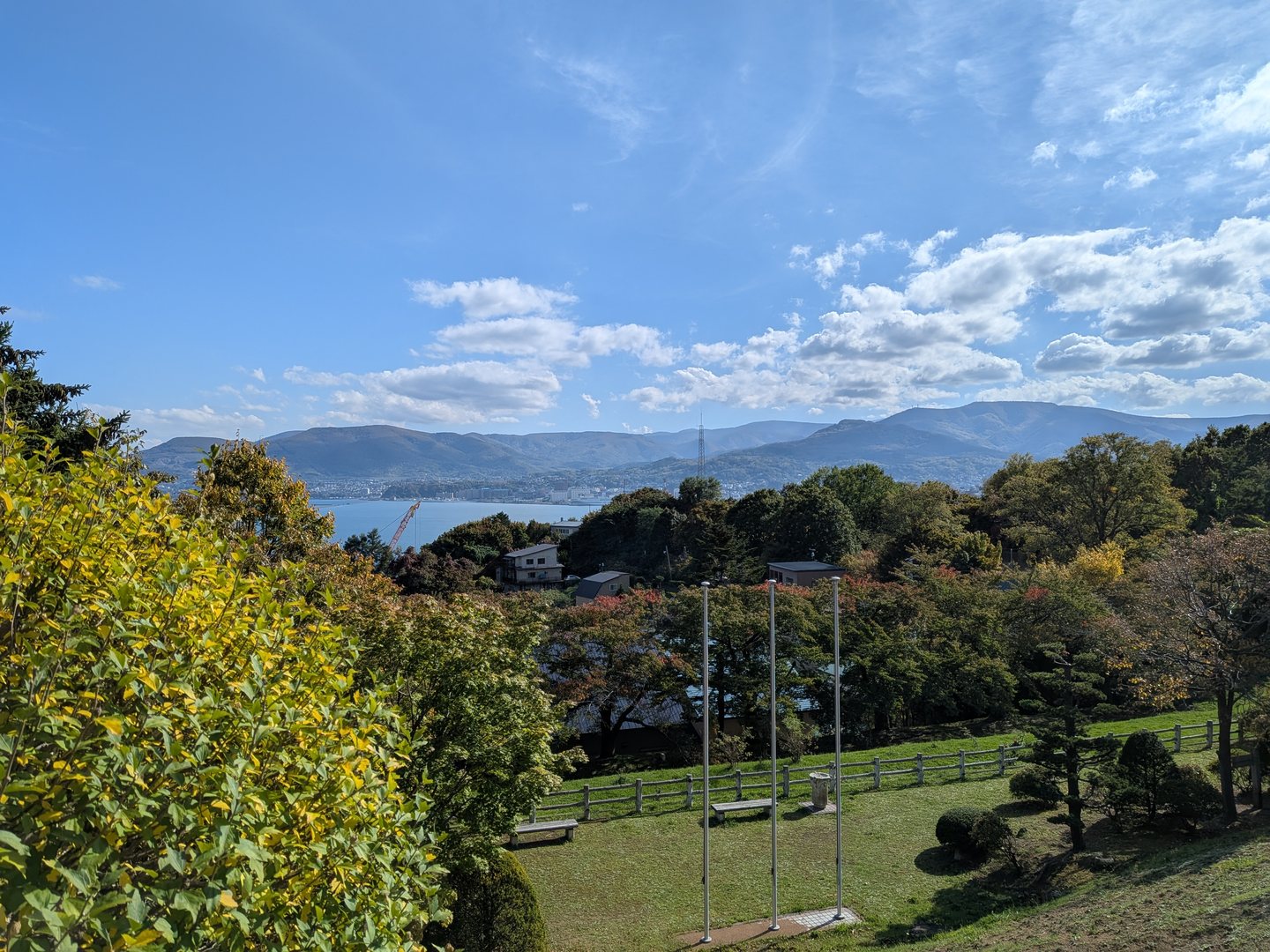
Otaru Park, in the middle of town, is a lovely park too, with some nice vistas and a relatively easy walk. It's under renovation at the moment, but there are plenty of walking areas still open. We're told the renovations include a waterpark.
Sapporo: Nakajima Park, a sweet potato festival and a hidden-gem sandwich
Sapporo is only about half an hour from Otaru, and we went back this month. (For how we got between the two, see Buses Beat the Train in our Otaru update.)
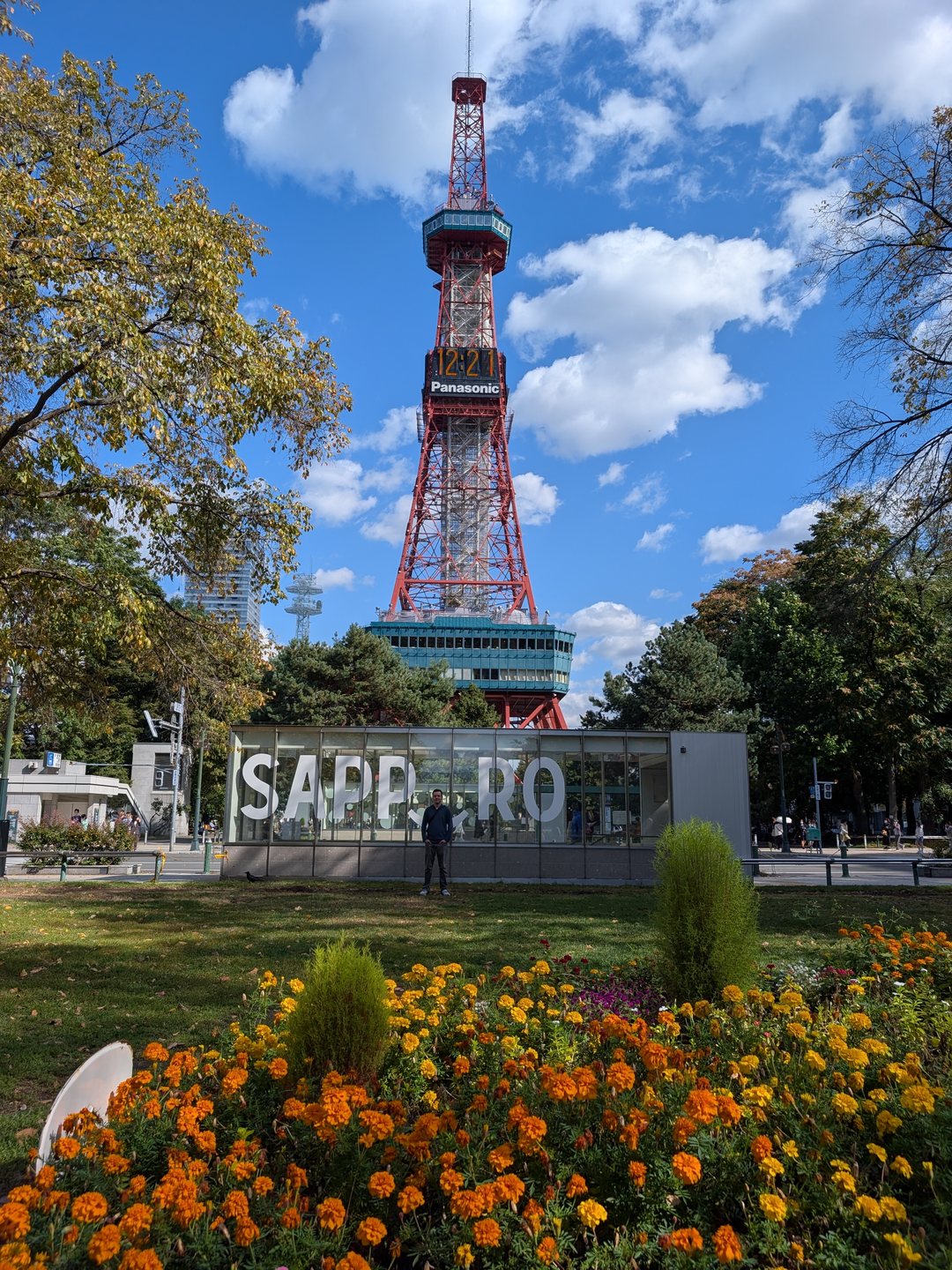
Nakajima Park is very pretty, and we visited twice. It's three or four stops from Sapporo Station on the Namboku subway line, depending on which side of the park you want to visit. There are riverside walking paths just south of the park, and the bridge there is a great vista for photos.
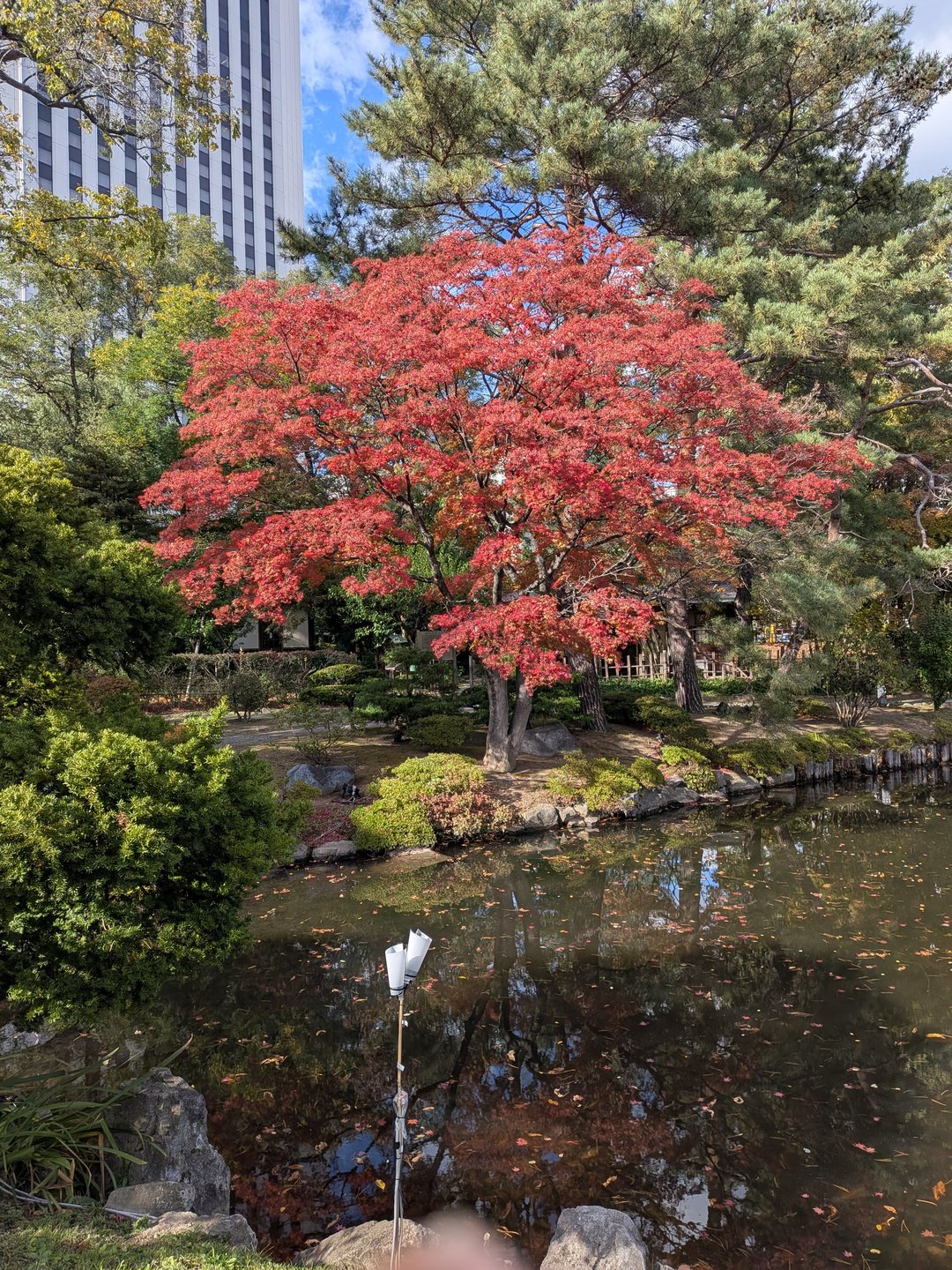
The baked sweet potato festival (Yakiimo Terrace) was on while we were there. Go early. The crowds later in the day were so bad that the roped-off festival area felt like sardines. Food trucks were set up around the park and just outside it, outside the roped-off area. This year it ran from October 23 to November 3, and past editions have run from late October into early November (2024 listing).
Hasamiya Sandwich on the south side of the park is a hidden gem. We had a BLT and a Reuben. Here's their Facebook page.
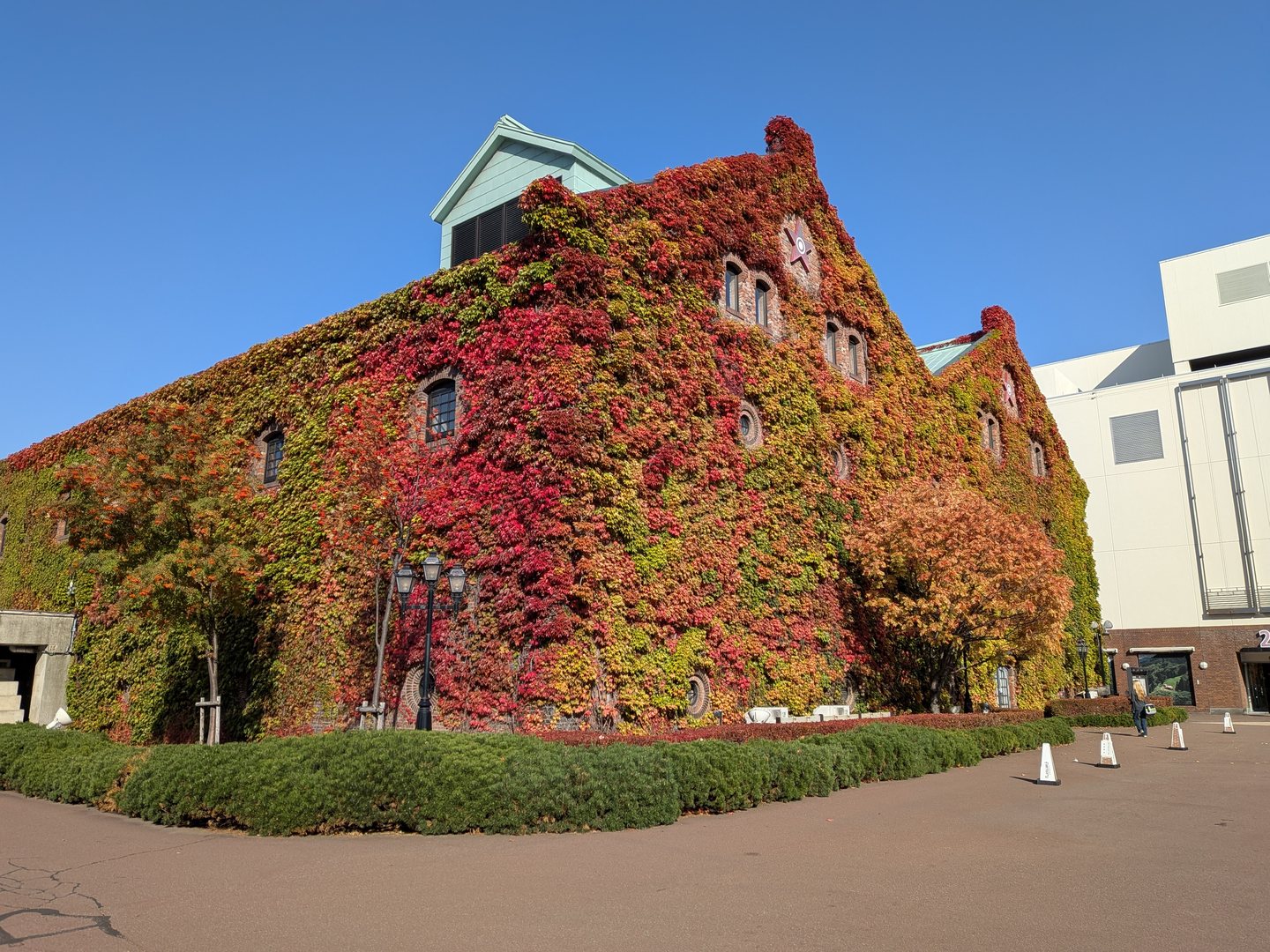
We also walked around Sapporo Factory, a shopping complex built on the site of the old Kaitakushi brewery, which was founded in 1876 (Wikipedia). The brick buildings were covered in fall ivy.
A day trip by car: Kutchan, Niseko and Lake Toya
Our road trip to Niseko and Lake Toya was still on the list when we wrote our last update, and it was a great day of exploring. We rented the car from the same Toyota Rental Car office at Otaru Station. The day cost about $175, including tolls.
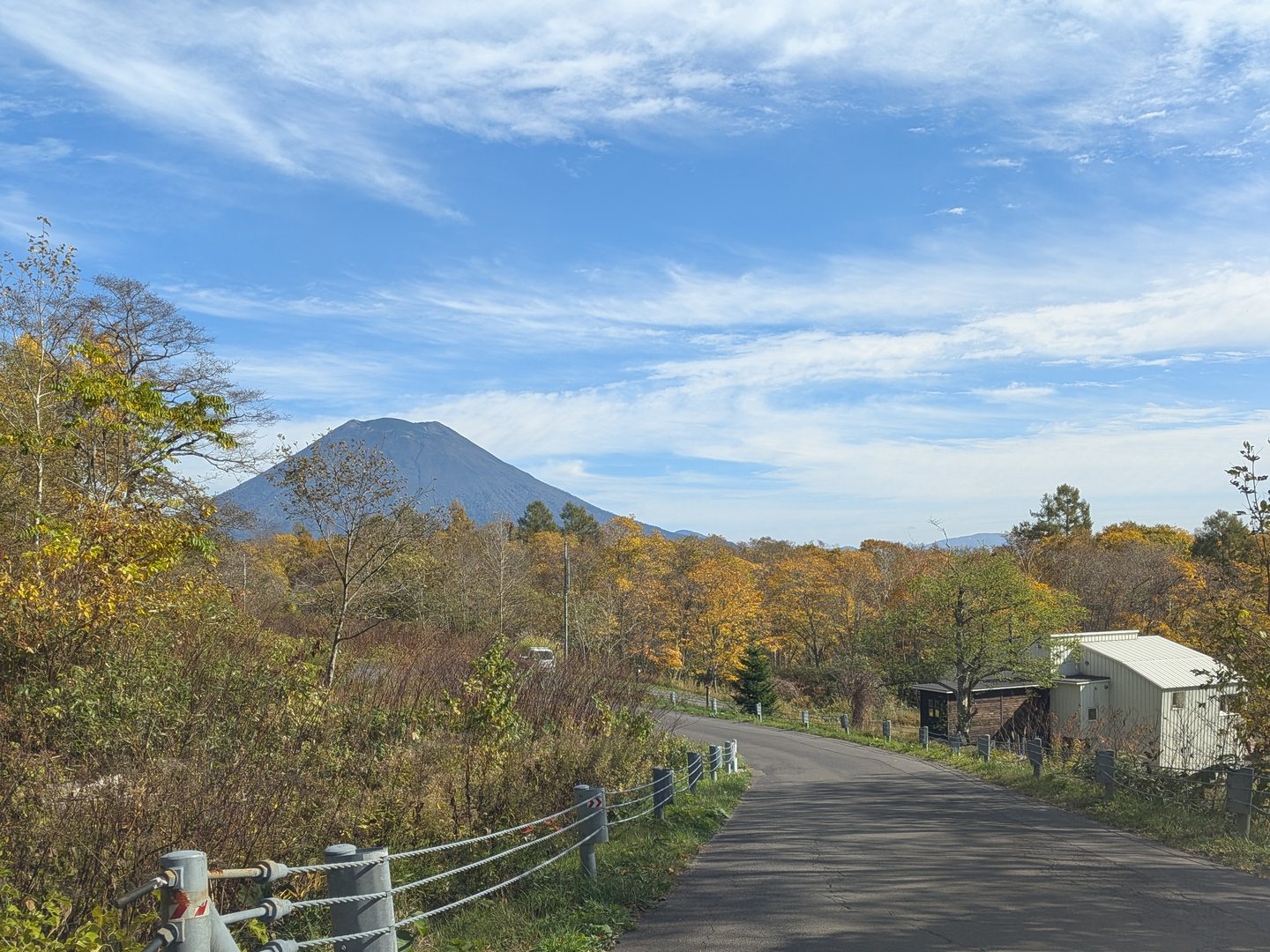
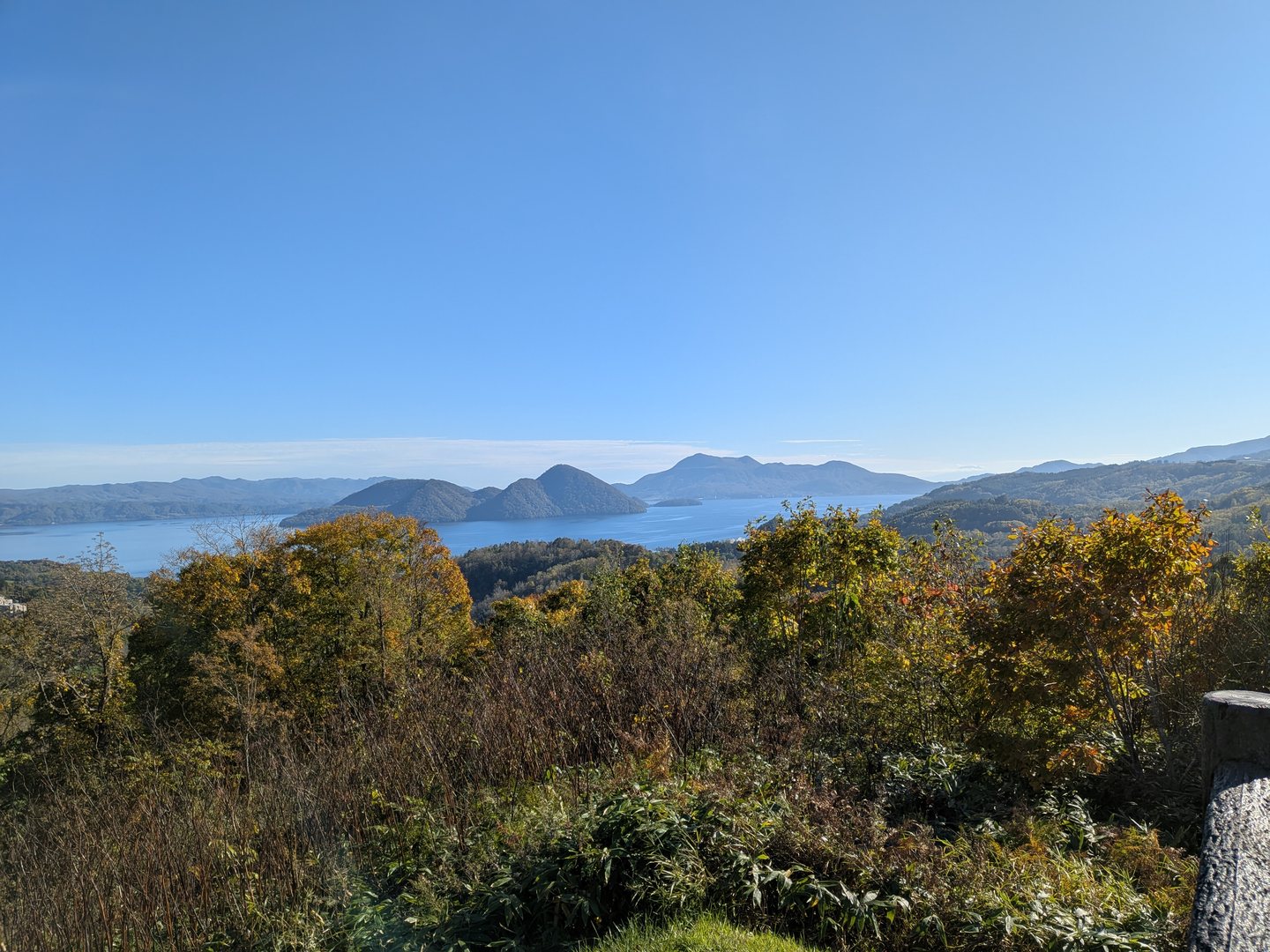
We drove through Kutchan and Niseko and on to Lake Toya. Mount Yotei showed up along the road and again across the fields. The inland colors had probably peaked a little earlier, in mid-October.
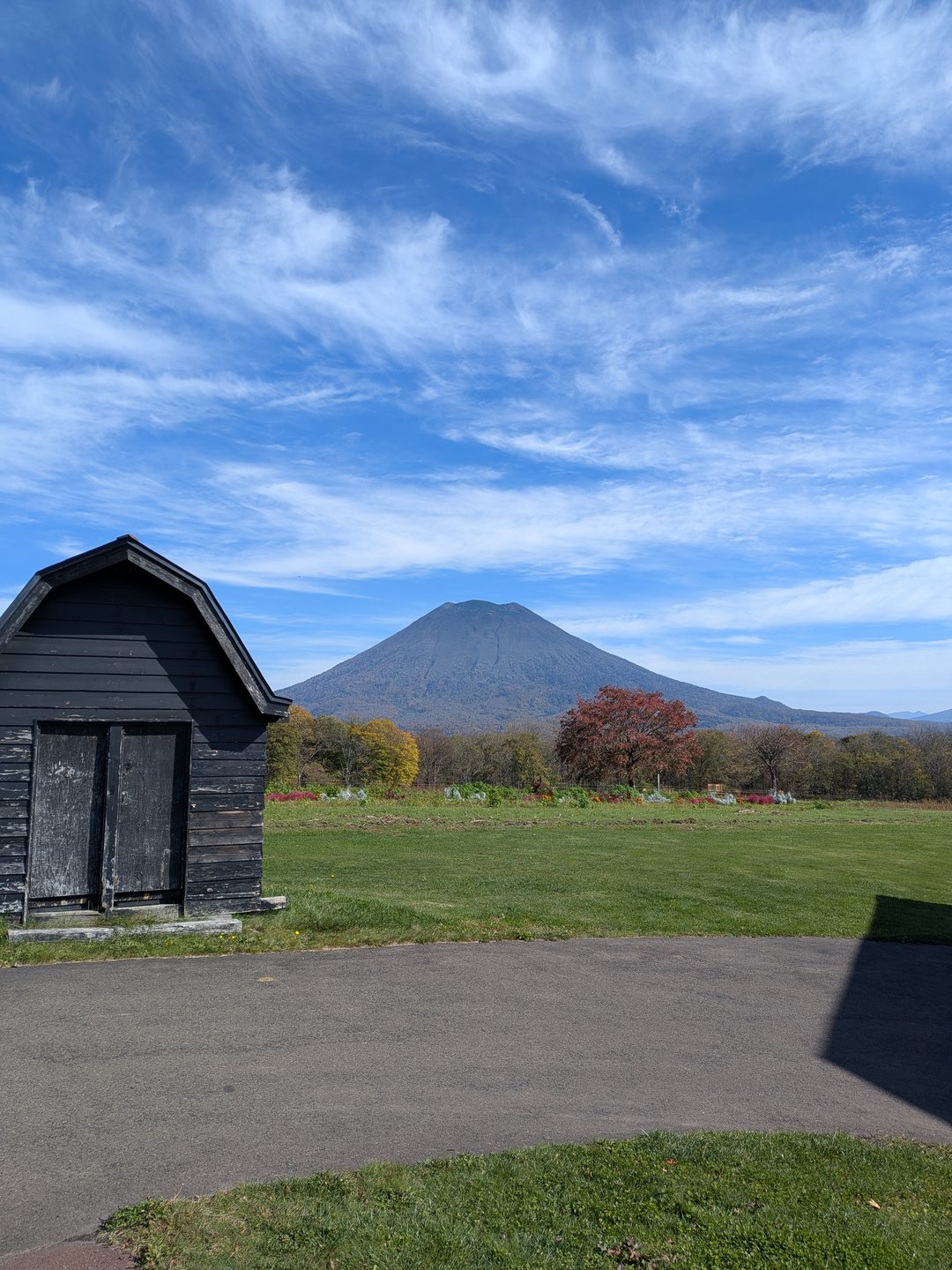
For lunch we stopped at Mandriano, the pizza restaurant at Niseko Takahashi Dairy Farm. We sat outside at the picnic tables and looked out at the volcano in the distance. The food was good, and the farm offered some great photo opportunities with fall flowers and fall colors.
Leaving Otaru: why we drove to Shin-Hakodate-Hokuto
Getting to Otaru takes some effort. We flew into Tokyo and spent the night there, in an Airbnb. The next day we took the Shinkansen north to Shin-Hakodate-Hokuto, then a local train to Sapporo, then the Rapid Airport train to Otaru. That is the detour United's new seasonal nonstop to Sapporo is meant to skip, and we wrote about it in our United post.
When it was time to leave, fall was quickly changing into winter. Instead of trying to navigate the train stations at rush hour with our carry-on bags, we rented a car and drove from Otaru straight to Shin-Hakodate-Hokuto. Our son joined us for this one-way trip, so there were three of us. We rented from Toyota Rental Car at Otaru Station, one way, with the full package including the ETC toll card and insurance. It cost $255 for the rental plus about $20 in tolls.
For comparison, the train would have cost about $140 for two people, so the rental was about twice as much. But with the three of us, the train would have been $210, against $275 for the rental and tolls. The rental was also far more convenient and a couple of hours shorter than the train.
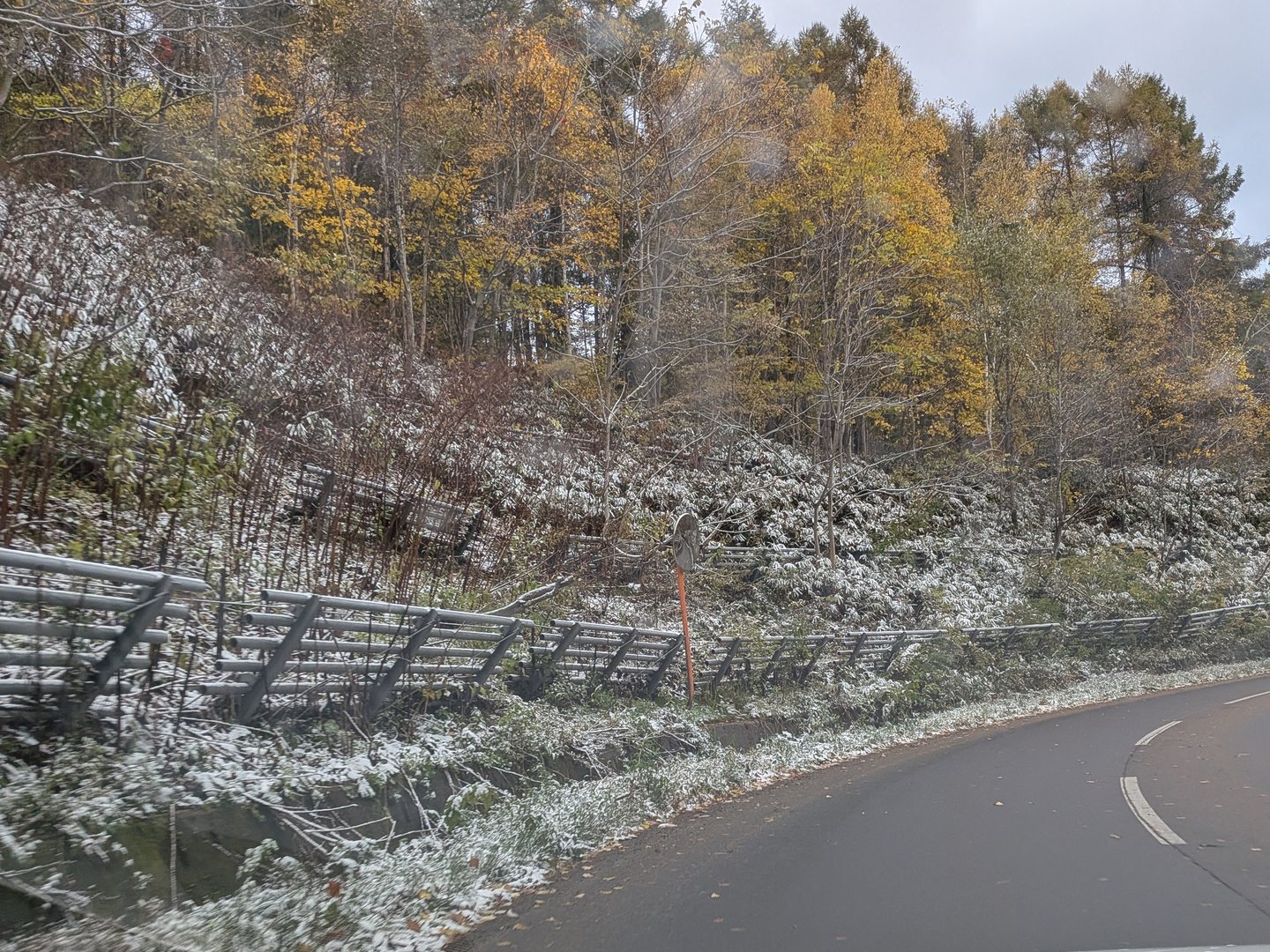
The drive was beautiful. We were greeted by snow squalls as we left Otaru and headed into the mountains. The snow was heavy at times, but the roads were fine, because temperatures were slightly above freezing and the ground was still relatively warm.
At Shin-Hakodate-Hokuto we took the Shinkansen to Omiya. That train arrived near rush hour, and the packed trains would have been no fun with our luggage. From Omiya we connected by rail to Shinjuku, where our hotel was, and that avoided a great deal of the crowds. We still arrived around the same time we would have if we'd connected at busy Tokyo Station.
We stayed the night at the Kimpton Shinjuku. If we were staying longer, we'd book an Airbnb, which is what we did when we first arrived in Tokyo.
What it cost
These are the amounts we paid in October 2026, in US dollars:
| What | Cost |
|---|---|
| Airbnb apartment, about a month | $2,176 |
| Rental car for one day (Kutchan, Niseko and Lake Toya), including tolls | About $175 |
| One-way rental, Otaru to Shin-Hakodate-Hokuto, with the full package including the ETC card and insurance (three of us: our son joined us for this trip) | $255 |
| Tolls on that drive | About $20 |
| For comparison: the train, Otaru to Shin-Hakodate-Hokuto | About $140 for two, $210 for three |
Otaru or Sapporo for a month?
If you want a big city, Sapporo is the better choice. Otaru is our pick. It's a mid-sized city with a lot of charm, and it has a lot of small bars and restaurants with a cozy, hometown feel. Everything here feels more personal.
And you don't have to choose, because Sapporo is only about half an hour away. We based ourselves in Otaru and made trips into Sapporo for the parks and the festivals.
What we'd tell you before you go, and what's next
- Pack for wind and changeable weather. Layers that cut the wind work best.
- Time the colors by where you're going. The coast was near peak or just past it in late October. Inland and higher up, the peak had probably come in mid-October.
- Go to festivals early. The sweet potato festival was far more pleasant early in the day.
- Consider a one-way rental for the big transfers. It cost about twice the train for two of us, and only a little more for three, and it saved a rush-hour transfer with luggage.
- Check what's open. Otaru Park is under renovation, though plenty of it is still open to walk.
As we left, fall was quickly turning into winter, and we're already looking forward to our next trip in March. Between now and then comes the house handover in mid-December, a couple more cruises and most of the winter in Panama. If you have questions about any of this, or tips for an Otaru winter, email us at info@theengineeredescape.com. We read every message.
Common questions
When do the fall colors peak in Otaru?+
In October 2026, the color around Otaru and along the coast was close to its peak or just past it by late October. Inland near Kutchan and Niseko, at higher altitude, the peak had probably come in mid-October. The timing shifts from year to year, so treat this as one year's experience.
How much does a month in an Otaru Airbnb cost?+
We paid $2,176 for a month in an apartment that suited a couple, in October 2026. It had a washer/dryer combo, great water pressure, and was about a 10 to 15 minute walk from JR Otaru Station.
Where do you buy groceries in Otaru?+
We used two supermarkets. Nagasakiya Otaru is in the basement of the large building across from Otaru Station, and it's convenient if you're within walking distance. The Aeon grocery in the Wing Bay mall is bigger, and we found the selection a bit better. Parking is on the ground level across from the entrance doors.
Is Otaru or Sapporo better for a long stay?+
It depends on what you want. Sapporo is better if you want a big city. We prefer Otaru, a mid-sized city with a lot of charm and many small bars and restaurants with a cozy, personal feel. Sapporo is only about half an hour away, so you can base yourself in Otaru and make day trips.
How did you get from Otaru to Niseko and Lake Toya?+
We rented a car for the day from Toyota Rental Car at Otaru Station. It cost about $175 including tolls. We drove through Kutchan and Niseko to Lake Toya, and stopped for pizza at Mandriano at Niseko Takahashi Dairy Farm.
Can you drive from Otaru to Shin-Hakodate-Hokuto?+
Yes. We rented a car one way from Toyota Rental Car at Otaru Station, with the full package including the ETC toll card and insurance. It cost $255 plus about $20 in tolls for the three of us, since our son joined us for this trip. For two people the train would have cost about $140, so the rental was about twice as much, and for three the train would have been $210. The drive was a couple of hours shorter and easier with luggage. We hit snow squalls leaving Otaru, but the roads were fine.
Sources
- Japan Ministry of Land, Infrastructure, Transport and Tourism: Former Temiya Line walking path
- YOI-TARU Taste Festival 2026 announcement (Japanese)
- Shiribeshi Subprefectural Bureau: Niseko Takahashi Dairy Farm pizza restaurant (Japanese)
- Otaru city listing: Temiya Park and the Temiya Ryokuka Botanical Gardens (Japanese)
- Domingo: Sapporo Yaki-imo Terrace 2024
- Nihon Local (a site from the same company as this one): free weekly local newsletter for Otaru
- Wikipedia: Sapporo Factory
Prices are what we paid in October 2026. Hours, fares and event dates change, so confirm before you go.